
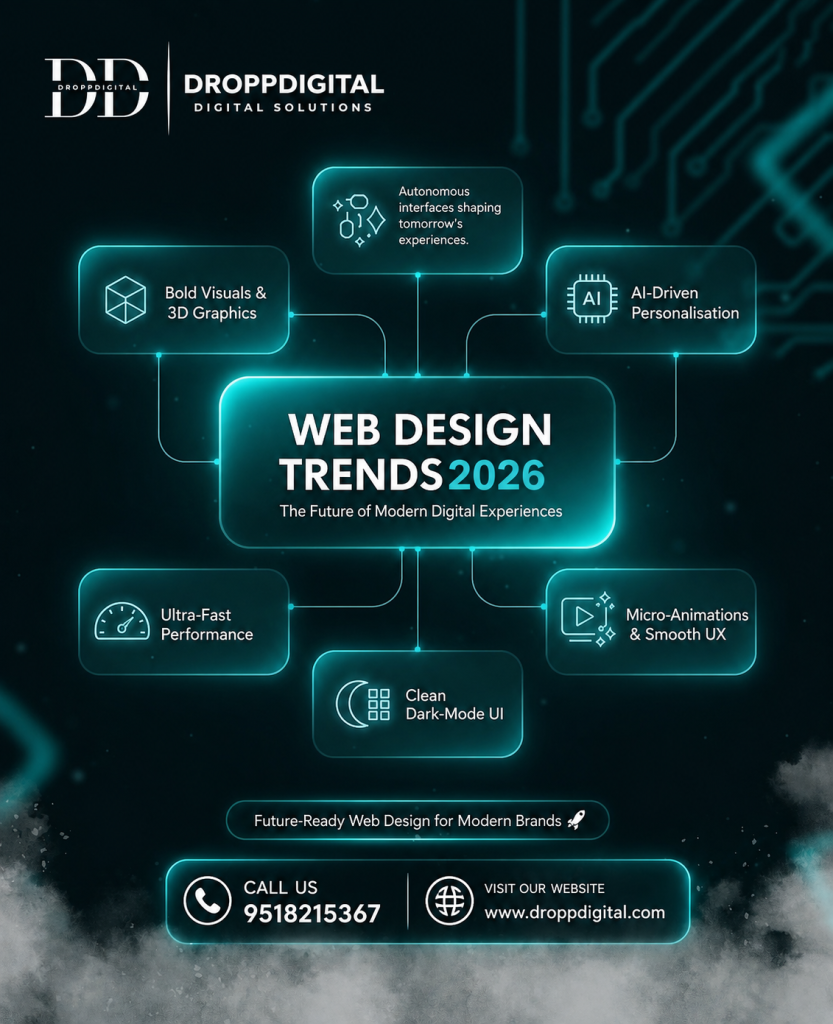
The digital world is evolving faster than ever, and your website is often the first interaction customers have with your brand. In 2026, modern website design is moving beyond attractive visuals. Businesses are focusing on user experience, artificial intelligence, performance, accessibility, personalization, and conversion-driven design.
For businesses that want to stay competitive online, understanding the latest website design trends in 2026 is essential.
At Dropp Digital, we help businesses build professional, modern, and performance-focused digital experiences that are designed to attract visitors and turn them into customers.
1. AI-Powered Website Experiences
Artificial intelligence is becoming an important part of modern website design.
In 2026, websites are increasingly using AI to deliver personalized content, intelligent search, automated customer support, recommendations, and dynamic user experiences.
AI-powered chatbots can answer common customer questions instantly, while personalization technology can display content based on visitor behavior.
For businesses, this means websites can become more helpful, interactive, and customer-focused.
2. Minimalist and Clean Website Design
Minimalism continues to be one of the strongest web design trends for 2026.
Modern websites are moving away from unnecessary visual elements and focusing on:
- Clean layouts
- Clear typography
- Strong visual hierarchy
- Simple navigation
- Strategic use of white space
- Focused calls-to-action
A clean design makes it easier for visitors to understand what a business offers and take the next step.
3. Mobile-First Website Design
Mobile users remain a major part of online traffic, making responsive website design more important than ever.
In 2026, websites should be designed with mobile users in mind from the beginning rather than simply adapting a desktop website later.
A mobile-first website should provide:
- Fast loading times
- Easy navigation
- Touch-friendly buttons
- Responsive layouts
- Readable text
- Optimized images
A website that works smoothly across smartphones, tablets, and desktops can provide a much better user experience.
4. Faster Websites and Better Performance
Website speed is no longer just a technical advantage. It directly affects user experience and business results.
Visitors expect websites to load quickly. Slow pages can increase bounce rates and reduce conversions.
Modern website development in 2026 is focusing heavily on:
- Image optimization
- Lightweight code
- Efficient hosting
- Caching
- Content delivery networks
- Optimized JavaScript and CSS
Performance-focused web design helps create a smoother experience while supporting SEO and conversions.
5. Interactive and Immersive Experiences
Websites are becoming more interactive.
Subtle animations, micro-interactions, scroll-based effects, interactive elements, and engaging transitions can make a website feel more dynamic.
However, animations should have a purpose. Too many effects can make a website confusing or slow.
The best approach is to use interactive design to guide attention and improve the overall user experience.
6. Bold Typography and Strong Visual Identity
Typography is becoming a major design element in 2026.
Large headlines, distinctive fonts, strong spacing, and creative typography can help businesses communicate their personality immediately.
A strong typographic hierarchy also makes important information easier to scan.
For brands, typography can become an important part of visual identity and help create a memorable website.
7. Personalized User Experiences
Not every website visitor has the same needs.
Personalization allows businesses to create more relevant experiences based on factors such as user behavior, location, preferences, or previous interactions.
Examples include personalized product recommendations, relevant content, customized offers, and targeted calls-to-action.
This trend is particularly valuable for eCommerce, SaaS, education, and service-based businesses.
8. Accessibility-Focused Web Design
Accessibility is becoming increasingly important in professional website development.
A modern website should be usable by as many people as possible, including visitors with disabilities.
Important accessibility practices include:
- Proper color contrast
- Keyboard-friendly navigation
- Descriptive alternative text
- Readable typography
- Clear navigation
- Accessible forms
- Logical page structure
Accessible design creates a better experience for everyone while helping businesses build more inclusive digital products.
9. Conversion-Focused Website Design
A beautiful website is valuable, but a website should also generate business results.
In 2026, more businesses are adopting conversion-focused web design.
Every important page should have a clear purpose and guide visitors toward an action such as:
Contact Us → Request a Quote → Book a Call → Buy Now → Sign Up
Strategic CTAs, trust signals, testimonials, simple forms, and clear messaging can help turn website traffic into leads and customers.
10. SEO and Web Design Working Together
SEO and website design are no longer separate strategies.
A successful website needs both an excellent user experience and a strong search-engine foundation.
Modern SEO-friendly web design includes:
- Mobile responsiveness
- Fast performance
- Clear site structure
- Search-friendly content
- Optimized headings
- Internal linking
- Descriptive URLs
- Image optimization
- Helpful content
Businesses should build websites with both users and search engines in mind.
11. Dark Mode and Flexible Interfaces
Dark mode continues to influence modern website interfaces.
It can provide a premium appearance and may be particularly effective for technology, creative, gaming, and luxury brands.
Some websites are also giving users more control over their interface preferences, allowing them to switch between light and dark themes.
12. Human-Centered Design in the AI Era
While AI is becoming increasingly powerful, human-centered design remains essential.
A website should not feel like it was created entirely by automation. Authentic photography, genuine brand messaging, human stories, customer testimonials, and clear communication can create trust.
The strongest websites in 2026 will likely combine AI-powered functionality with authentic human experiences.
Why These Website Design Trends Matter for Businesses
Your website is more than an online brochure. It can work as a 24/7 marketing, sales, branding, and customer-service platform.
Following modern website design trends can help businesses:
- Build stronger brand credibility
- Improve user experience
- Increase engagement
- Generate more leads
- Improve search visibility
- Increase conversions
- Stay competitive
However, businesses should not follow every trend simply because it is popular.
The right website strategy should be based on your target audience, industry, business goals, and customer journey.
Build a Modern Website with Dropp Digital
At Dropp Digital, we understand that professional website design is about more than aesthetics.
Our approach combines modern UI/UX design, responsive development, SEO-friendly structure, website performance, branding, and digital marketing to create websites that support real business growth.
Whether you are launching a new business website, redesigning an existing website, or building an eCommerce platform, the right strategy can help you create a stronger digital presence.
Final Thoughts
The biggest website design trends of 2026 are focused on creating websites that are faster, smarter, more accessible, personalized, interactive, and conversion-driven.
From AI-powered experiences and mobile-first design to performance optimization and human-centered branding, businesses have many opportunities to improve their online presence.
The goal isn’t simply to create a website that looks modern. The goal is to create a website that works for your business and your customers.
Ready to build a modern website for your business?
Choose Dropp Digital for professional website design, digital marketing, SEO, and growth-focused digital solutions.